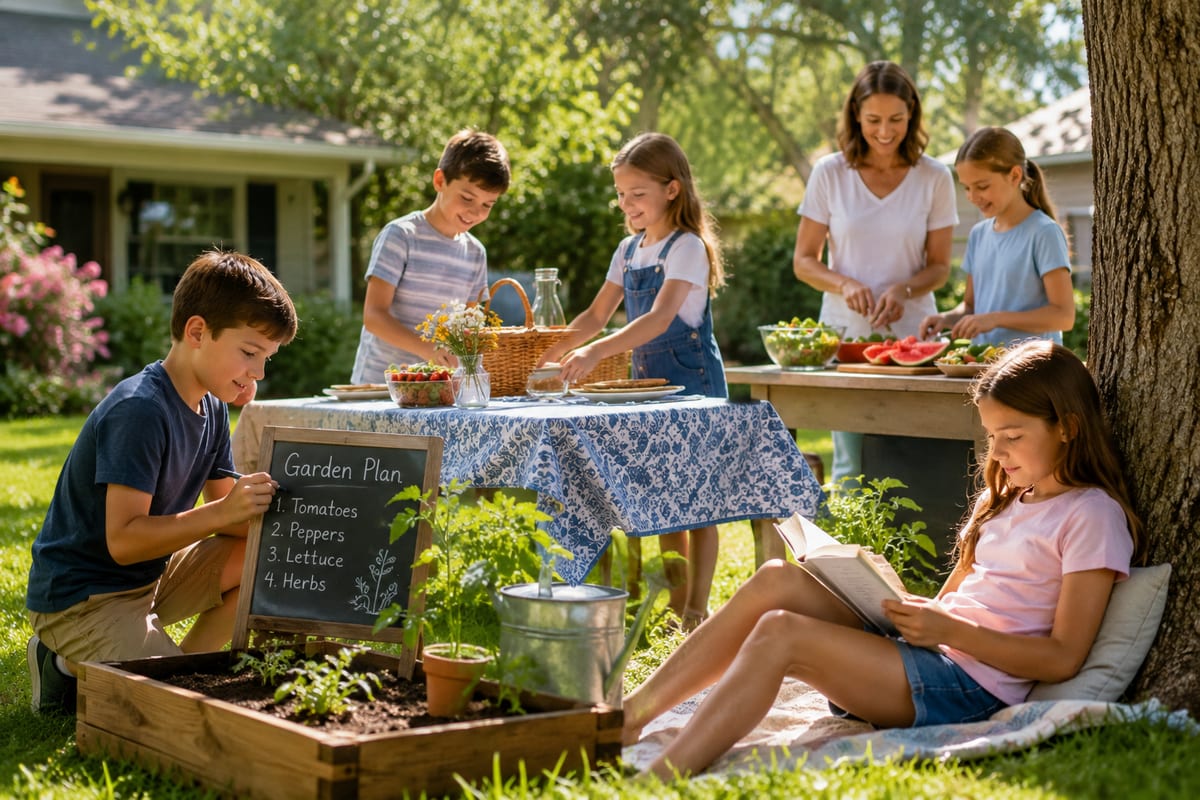
How to Raise Independent Learners: 10 Habits Parents Can Encourage at Home This Summer
Summer is finally here.
After a busy year of schedules, activities, and routines, many families are looking forward to a slower pace. The extra flexibility that summer brings creates opportunities for children to explore interests, develop new skills, and gain confidence in their abilities.
While summer is often viewed as a break from learning, it can also be one of the best times to nurture something that benefits children for years to come: independence.
Independent learners aren't simply children who can complete tasks on their own. They're curious thinkers who ask questions, solve problems, pursue interests, and take ownership of their growth. These skills help children succeed not only in school, but also in friendships, future careers, and everyday life.
The good news is that independence isn't something children either have or don't have. It's developed through small experiences, repeated over time.
How Do You Raise an Independent Learner?
Parents can encourage independence by giving children meaningful responsibilities, allowing age-appropriate decision-making, supporting personal goals, encouraging problem-solving, creating routines, nurturing curiosity, and providing opportunities for children to learn through experience.
Summer is an ideal time to build these habits because children have more freedom to practice them in everyday situations.
Why Independence Matters
One of the greatest gifts we can give children is confidence in their ability to navigate the world.
Research from the Harvard Graduate School of Education suggests that children develop confidence and competence when adults gradually transfer responsibility rather than solving every problem for them. Likewise, experts at the Child Mind Institute emphasize that independence helps children build resilience, self-confidence, and executive functioning skills.
Independent children learn that they are capable. They discover that challenges can be overcome, mistakes can be corrected, and new skills can be learned through effort and persistence.
Those lessons often stay with them long after childhood.
Why Summer Is the Perfect Time to Build Independence
During the school year, life can feel rushed. There are places to be, schedules to follow, and countless responsibilities competing for attention.
Summer creates breathing room.
Children have more opportunities to:
- Pursue interests they are genuinely excited about
- Take on new responsibilities
- Try unfamiliar activities
- Complete personal projects
- Set goals and work toward them
- Practice practical life skills
Without the pressure of a packed schedule, children often have more space to take initiative and develop confidence through experience.
1. Let Them Solve Age-Appropriate Problems
When children encounter challenges, it can be tempting to jump in with a solution. But some of the most valuable learning happens when children have opportunities to think through problems on their own.
If siblings disagree about a game, a toy breaks, or a project doesn't go as planned, try asking questions before offering answers.
Questions like:
- What do you think you could do?
- What are your options?
- What might happen if you tried that?
Helping children think through challenges develops critical thinking skills and confidence in their own abilities.
Try this week: The next time your child encounters a minor problem, pause before offering a solution and ask them to brainstorm three possible options.
2. Give Them Meaningful Responsibilities
Children thrive when they know they contribute to the family.
Responsibilities don't need to be complicated. What matters is that children know their role is important.
Examples include:
- Feeding pets
- Watering plants
- Helping prepare meals
- Setting the table
- Organizing personal belongings
- Assisting with family projects
When children are trusted with responsibilities, they develop accountability and confidence.
Try this week: Assign one new responsibility that your child can fully own throughout the summer.
3. Encourage Decision-Making
Independent learners become comfortable making choices.
Providing age-appropriate opportunities to make decisions helps children practice evaluating options and accepting responsibility for outcomes.
Children might choose:
- Which book to read
- Which summer activity to try
- How to spend part of their free time
- Which project to work on first
- What goal they'd like to accomplish this summer
The more opportunities children have to make decisions, the more confidence they gain.
Try this week: Let your child choose a family activity, meal, or outing and help plan it.
4. Create Predictable Routines
Children often become more independent when they know what to expect.
Simple routines reduce the need for constant reminders and help children take ownership of their responsibilities.
A summer routine might include:
- Morning responsibilities
- Reading time
- Outdoor activity
- Creative project time
- Free play
Routines provide structure while still allowing flexibility and exploration.
Try this week: Create a simple visual routine that your child can follow independently.
5. Teach Goal Setting
Goals help children learn how to plan, persist, and celebrate progress.
Summer is an excellent time for children to pursue personal goals based on their interests.
Some examples include:
- Reading five books
- Learning to ride a bike
- Mastering a new recipe
- Saving money for a purchase
- Learning a musical skill
- Completing a creative project
Breaking larger goals into smaller steps helps children experience success along the way.
Try this week: Help your child create one summer goal and identify the first step they can take.
6. Allow Productive Struggle
Learning new things isn't always easy.
Sometimes children need time to wrestle with a challenge before finding a solution.
Whether they are building something, learning a skill, or solving a problem, productive struggle helps children develop perseverance and resilience.
When children discover solutions through their own effort, the confidence they gain is lasting.
Try this week: When your child faces a challenge, offer encouragement instead of immediate assistance and see what they can accomplish independently.
7. Encourage Curiosity
Independent learners are naturally curious.
When children ask questions, view those moments as opportunities for exploration.
Instead of immediately providing answers, consider asking:
- What do you think?
- How could we find out?
- Where might we look for that information?
Curiosity encourages children to become active participants in their learning.
Try this week: Keep a family curiosity list and spend time researching questions together.
8. Let Them Manage Their Own Projects
Projects provide wonderful opportunities for children to practice planning, problem-solving, and follow-through.
Summer projects might include:
- Starting a garden
- Writing a story
- Creating artwork
- Building something
- Planning a neighborhood activity
- Organizing a service project
The project itself matters less than the ownership children feel throughout the process.
Try this week: Invite your child to choose a project they would like to complete by the end of summer.
9. Celebrate Effort and Growth
Children are more willing to try new things when they know mistakes are part of learning.
Rather than focusing only on outcomes, recognize qualities such as:
- Persistence
- Creativity
- Responsibility
- Initiative
- Problem-solving
- Improvement
When children understand that growth comes through effort, they become more willing to tackle challenges.
Try this week: Point out one example each day of effort or perseverance that you notice in your child.
10. Model Lifelong Learning
Children learn a great deal by watching the adults around them.
Let your children see you:
- Reading
- Learning a new skill
- Trying something unfamiliar
- Solving problems
- Asking questions
- Pursuing personal goals
When children see learning as a lifelong process, they begin to view growth as something that continues well beyond childhood.
Try this week: Share a skill you're currently learning and invite your child to learn alongside you.
Independence Skills by Age
Ages 5–7
Children in this age range can begin developing independence by:
- Following simple routines
- Feeding pets
- Cleaning up after activities
- Making basic choices
- Helping with household tasks
Ages 8–10
Children often enjoy greater ownership and responsibility, such as:
- Managing personal belongings
- Tracking reading goals
- Preparing simple snacks
- Completing projects independently
- Helping plan family activities
Ages 11–13
Older children can continue building independence through:
- Setting personal goals
- Managing schedules and responsibilities
- Budgeting money
- Leading projects
- Planning activities and events
- Taking ownership of longer-term commitments
10 Summer Activities That Build Independence
Looking for practical ways to encourage independence this summer? Try one of these activities:
- Plan a family picnic
- Start a small garden
- Learn a new skill
- Create a neighborhood service project
- Set a summer reading challenge
- Plan and prepare a meal
- Build something from scratch
- Organize a game night
- Save for a personal goal
- Create a summer project around a favorite interest
These experiences help children practice responsibility, decision-making, creativity, and perseverance in meaningful ways.
Independence Starts With Trust
Children grow when they are trusted with opportunities to contribute, make decisions, and learn through experience.
At Ignite Entrepreneurship Academy, students are encouraged to take ownership of projects, explore ideas, collaborate with classmates, and develop confidence through meaningful learning experiences. We believe children thrive when they are trusted with responsibility and supported as they grow.
Frequently Asked Questions
What is an independent learner?
An independent learner takes initiative, asks questions, solves problems, and takes ownership of their learning and responsibilities. Independent learners are motivated by curiosity and develop confidence through experience.
How can parents encourage independence during summer?
Parents can encourage independence by giving children responsibilities, allowing age-appropriate decision-making, supporting personal goals, encouraging problem-solving, and providing opportunities to explore interests.
Why is independence important for children?
Independence helps children develop confidence, resilience, responsibility, and problem-solving skills. These qualities benefit children throughout school, relationships, future careers, and everyday life.
At what age should children start becoming independent?
Children can begin developing independence from a young age through simple responsibilities, choices, routines, and opportunities to solve age-appropriate problems. Independence grows gradually over time.
Can independence improve academic success?
Children who develop responsibility, self-management, problem-solving abilities, and confidence often become more effective learners because they take greater ownership of their growth and learning experiences.
A Summer of Growth
As families across Utah County settle into summer routines, small opportunities to build independence can make a lasting impact. Whether it's planning a project, pursuing a new interest, helping with family responsibilities, or working toward a personal goal, each experience helps children develop confidence in their ability to learn, adapt, and contribute.
Summer doesn't have to be packed with lessons or schedules to be meaningful. Sometimes the most valuable growth happens when children are trusted to explore, create, and discover just how capable they are.
Ready to join IEA?
Give your child a Montessori foundation and entrepreneurial wings. Apply to the Ignite Entrepreneurship Academy enrollment lottery today.
Apply to the lottery