Multi-Age Classrooms: Why Mixing Grades Helps Kids Learn (and How It Works at IEA)
Short answer: A multi-age classroom groups children from two or more grade levels in one room with one teacher, usually for more than one year. Younger students learn by watching and working alongside older ones. Older students lock in what they know by helping and leading. Every child moves at their own pace instead of the pace of an age group. At Ignite Entrepreneurship Academy, every classroom from 1st through 8th grade is multi-age.
If you went to a traditional school, you probably sat with kids born within twelve months of you, did the same worksheet on the same day and moved to a new teacher every fall. That model is so familiar that a classroom mixing 1st and 2nd graders, or 7th and 8th graders, can sound odd. It isn't new. Multi-age grouping is the standard in Montessori education and was the norm in one-room schoolhouses for generations. Here's how it works, what kids get out of it and what to ask if you're considering a school that uses it.
Key Takeaways
- Kids learn from each other. Younger students see what's coming next. Older students deepen their understanding by explaining it.
- Pace is individual. A child who is ahead in reading and behind in math can work at the right level in both, without being labeled.
- Teachers know your child longer. Two years with the same teacher means less time lost each fall getting to know a new class.
- Leadership is built in. Every child gets a turn being the youngest and a turn being the oldest.
- At IEA: classrooms are grouped as Kindergarten, Lower Elementary (1st–2nd), Middle Elementary (3rd–4th), Upper Elementary (5th–6th) and Middle School (7th–8th).
What Is a Multi-Age Classroom?
A multi-age classroom is a single class that intentionally includes students from more than one grade. It's different from a "combo class," where a school puts two grades together because enrollment numbers didn't divide evenly. In a combo class, the teacher often runs two separate curricula side by side. In a true multi-age classroom, the mix is the point. Lessons, projects and routines are designed around the fact that kids are at different stages.
Students typically stay with the same teacher and many of the same classmates for the full span of the group, usually two or three years. Each year, the oldest students move on and a new group of younger students joins.
Why Mixing Ages Works
Younger kids learn by watching
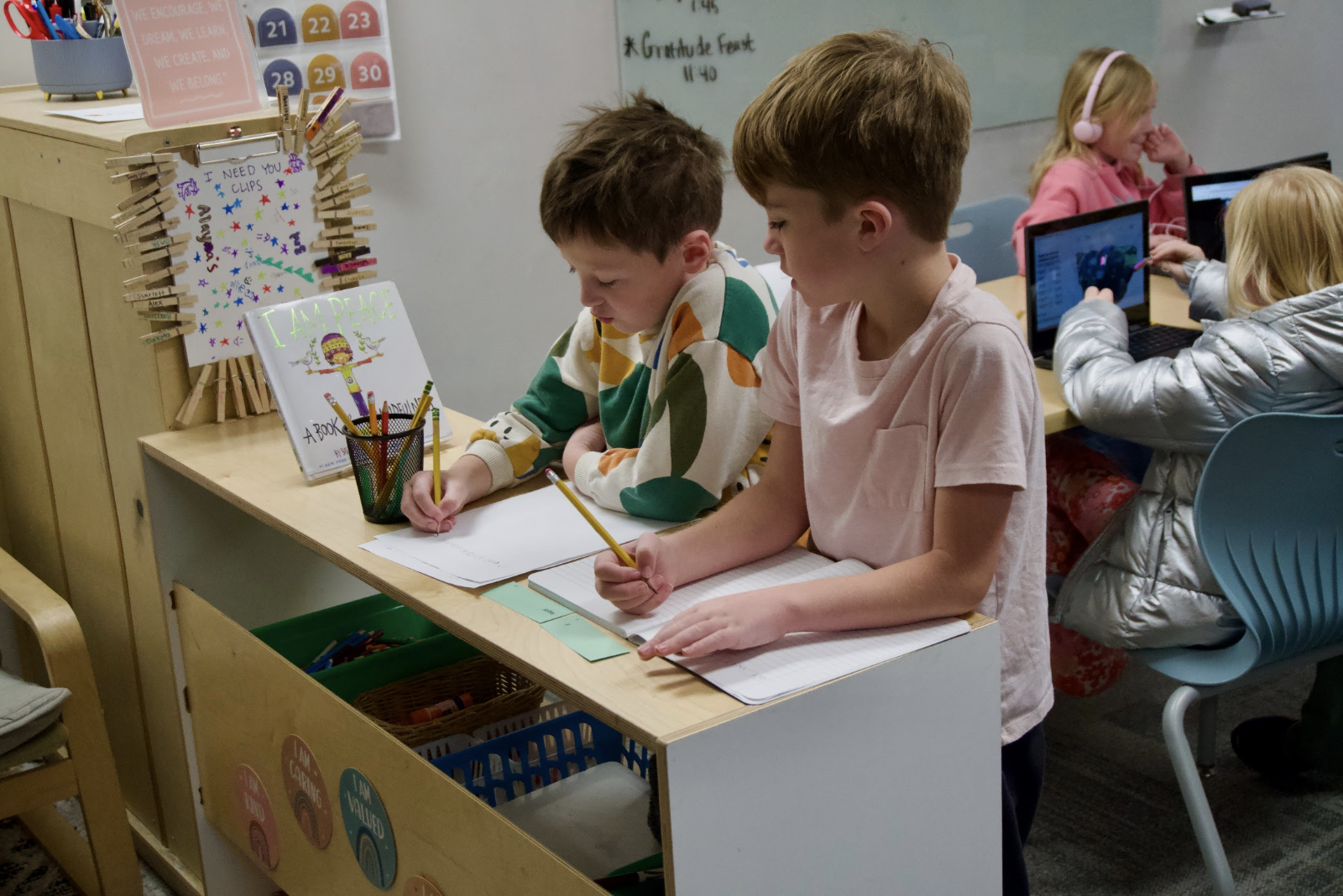
Children are wired to imitate kids slightly older than they are. A 1st grader who sees a 2nd grader reading a chapter book, or a 7th grader who watches an 8th grader pitch a business idea, gets a concrete picture of what they're working toward. That's more motivating than a goal described by an adult.
Older kids learn by teaching
Explaining something to someone else is one of the fastest ways to find the gaps in your own understanding. When an older student helps a younger one with a math problem, they have to slow down, organize their thinking and put it into words. That kind of practice sticks.
Kids move at their own pace
In a single-grade room, the class tends to move together, which leaves some kids bored and others lost. In a multi-age room, the range of work is wider by design. A student who's ready for harder material can access it. A student who needs more time on a skill can get it without feeling like they've fallen behind "the grade." It's the same reason IEA uses longer learning blocks instead of whole-class pacing that changes subjects every 45 minutes.
Relationships carry over
The first weeks of every school year are spent learning names, routines and personalities. In a multi-age classroom, the teacher already knows two-thirds or half of the class on day one, and returning students help set the tone for new ones. That means more time learning and less time resetting.
Every child gets to lead
In a mixed-age group, a child's role changes as they grow. Their first year, they're the newcomer who learns the ropes. By their last year, they're the one modeling routines, welcoming new students and running parts of the classroom. Kids who are quiet in a same-age group often step up when they become the "big kids."
Common Parent Concerns
"Will my older child be held back?"
No. Because work is individualized, older students aren't waiting for younger ones to catch up. They have their own lessons, goals and projects at their level. Helping a younger classmate is part of the day, not the whole day.
"Will my younger child be overwhelmed?"
Usually the opposite. Younger students get more models, more help and more patience than they'd get in a room where everyone is new at the same time. Teachers still give direct lessons at each child's level.
"How do they cover grade-level standards?"
Multi-age classrooms at Utah public schools, including charter schools, teach to the Utah Core standards. Teachers track each student's progress against the standards for their grade and plan lessons so every standard is covered across the span of the group.
"What about social life?"
Kids still have friends their own age. They also learn to get along with kids who are older and younger, which is closer to how the real world works. Very few adults spend their days only with people born the same year they were.
How Multi-Age Learning Works at IEA
Ignite Entrepreneurship Academy is a tuition-free public K–8 charter school in Lehi. Students learn in five multi-age communities:
- Kindergarten: a Montessori-based first year of school
- Lower Elementary: 1st and 2nd grade
- Middle Elementary: 3rd and 4th grade
- Upper Elementary: 5th and 6th grade
- Middle School: 7th and 8th grade
IEA uses a Montessori model in grades K–3 and a blended learning model in grades 4–8, with project-based learning and entrepreneurship in every grade. Mixed ages make that work. Older students lead project teams, younger students take on real roles in them and everyone practices the collaboration and communication skills that matter long after 8th grade.
Thinking about IEA? There are openings now for the 2026–27 school year in kindergarten and grades 5–8. Applications for 2027–28 open Monday, November 16, 2026 and close Friday, January 15, 2027 at 12:00 pm. See the enrollment page for details, or book a tour and see a multi-age classroom in action.
Frequently Asked Questions
Is a multi-age classroom the same as a combo class?
No. A combo class is usually created because of enrollment numbers, and the teacher often teaches two grades separately. A multi-age classroom is designed around mixing ages, and students stay with the same teacher for the full span of the group.
Are multi-age classrooms only a Montessori thing?
Montessori schools are the best-known users of multi-age grouping, but many public, private and charter schools use it, especially in elementary grades.
Is my child a good fit for a multi-age classroom?
Most children adjust quickly. Kids who are curious, like working with others or need a different pace than their grade tend to do especially well. Our charter school fit checklist can help you think it through.
What happens when my child moves to the next group?
They move up with classmates they already know and join a new teacher who has older students ready to show them the ropes. The transition is gradual, not a fresh start every year.
Ready to join IEA?
Give your child a Montessori foundation and entrepreneurial wings. Apply to the Ignite Entrepreneurship Academy enrollment lottery today.
Apply to the lottery